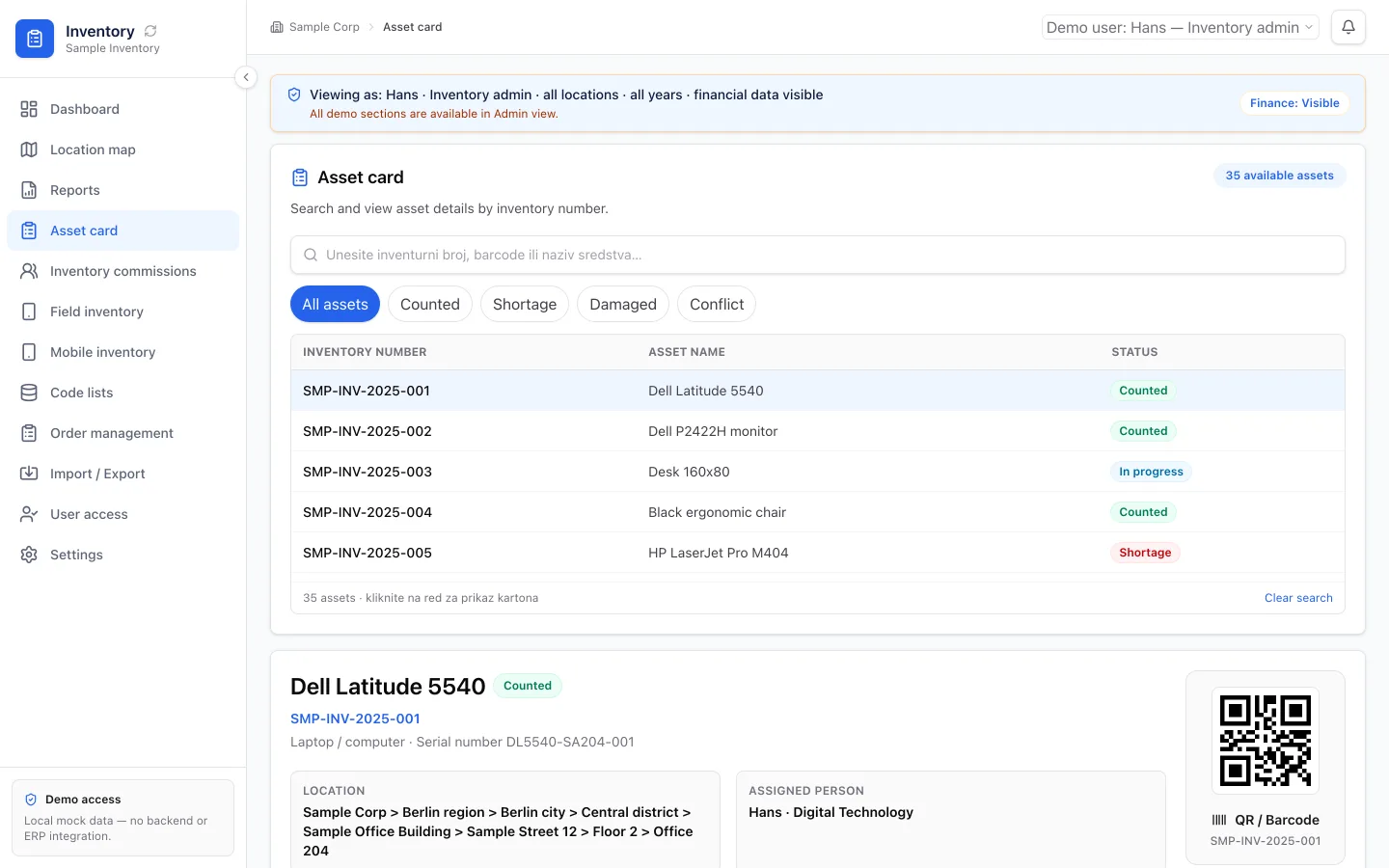
Asset inventory software: a practical operator guide
Operators do not lose time in the tools they can see. They lose it in the quiet gaps between systems, the copy step, the waiting reply, the sheet that became a.
Operators do not lose time in the tools they can see. They lose it in the quiet gaps between systems, the copy step, the waiting reply, the sheet that became a system by accident.
What follows is a practical take on asset inventory software: a practical operator guide, built around a single sore spot: an off-the-shelf tool that fits the brochure and not the real work. The point here is not to add tooling. It is to find the one place a purpose-built system quietly depends on a person and decide whether that is safe.
01Quick answer
If people are asking about when a spreadsheet should become a workflow system, the useful split is: keep the workaround when the work is small and standard; build a focused system when the same exception, report, or handoff keeps eating the week.
02If people ask about when a spreadsheet should become a workflow system
| Usual workaround | Focused system | |
|---|---|---|
| What it is | spreadsheet, email, or another SaaS subscription | a focused system that matches the real workflow |
| Fits a purpose-built system when | The process is small and standard | The same exception, report, or handoff repeats |
| Breaks when | People become the integration layer | You try to boil the ocean in v1 |
| Next step | Keep it, write the rule down | Map the workflow, then build the narrow first version |
03Best for
- Teams repeating the same handoff every week
- Managers who cannot see status without asking
- Operators stuck reconciling two tools by hand
04Not a fit when
- A one-off task that will not repeat
- A standard process a simple tool already fits
- Anyone looking for guaranteed revenue or medical claims
05The real problem
The failure mode is almost always the same. Each tool around a purpose-built system is fine on its own, and the work still stalls in the space between them, because no one formally owns the moment a record moves from one system to the next.
06A concrete example
A team tracks physical assets in a sheet that lives on one laptop. It works until an audit, when the difference between what is recorded and what exists turns into a week of manual checking that a purpose-built system would have prevented.
This is not a tooling problem and not a people problem. It is a design problem, and it is the kind of thing HATT builds for: map the handoffs around a purpose-built system, replace the highest-friction step first, then connect reporting to a real decision. Related reading: buy vs build for approval workflows.
07Questions worth asking first
Before another subscription, sit with a few honest questions:
- What would a purpose-built version remove from every cycle
- Is your process standard enough for a generic tool, or shaped by how you specifically operate
- Which exception does the current tool quietly refuse to handle
- Where does the work become archaeology instead of a lookup
- Which reporting requirement does no off-the-shelf tool produce cleanly
The fuzzy answers are the whole point. That is where a purpose-built system is quietly leaking time.
08What a practical first build replaces
The trap with a purpose-built system is trying to model everything at once. The better move is to take the single most expensive exception and build the narrow system that handles it, then earn the next piece.
The candidates worth building first usually include:
- The asset or record tracking that falls apart the moment it is audited
- The cycle that turns into archaeology every time it comes around
- The reporting requirement an auditor expects that no generic tool produces
- The one workflow that is genuinely shaped by how you specifically operate
There is a real tradeoff around a purpose-built system. Building costs time and attention up front, and a generic system is faster to start. The honest comparison is not price against price, it is the license plus the recurring manual glue against a system that owns the work. When the glue is an hour every week, the math changes.
09FAQ
When is a purpose-built system worth it?
When your workflow is the product of how your organization actually operates and generic tools keep forcing copy-paste. At that point the recurring manual work costs more than building the thing that fits.
How does HATT approach a first version?
By mapping the workflow first, scoping a version that removes the worst step, and connecting reporting to real decisions. No invented metrics, no pretending the exception does not exist. See also when to build custom software instead of forcing another tool.
10Where to go from here
You do not need a bigger stack. You need to know exactly where a purpose-built system depends on a person, and to decide, on purpose, whether that is a risk you are willing to keep running.
If you want a second set of eyes on where a purpose-built system actually breaks, HATT maps the workflow first and scopes a first version that removes the worst step. You can book a scoping call to talk it through.
Work with us
Have a complex workflow worth turning into a product?
Explore the current portfolio or book a focused walkthrough to discuss a product, pilot, or partnership.